
OPHAN-V
A small electric aircraft that takes off and lands like a helicopter and flies like a plane. Two tilting front motors lift it straight up, then rotate forward for efficient wing-borne cruise. Built to be carried in two cases and flown by a team of two.
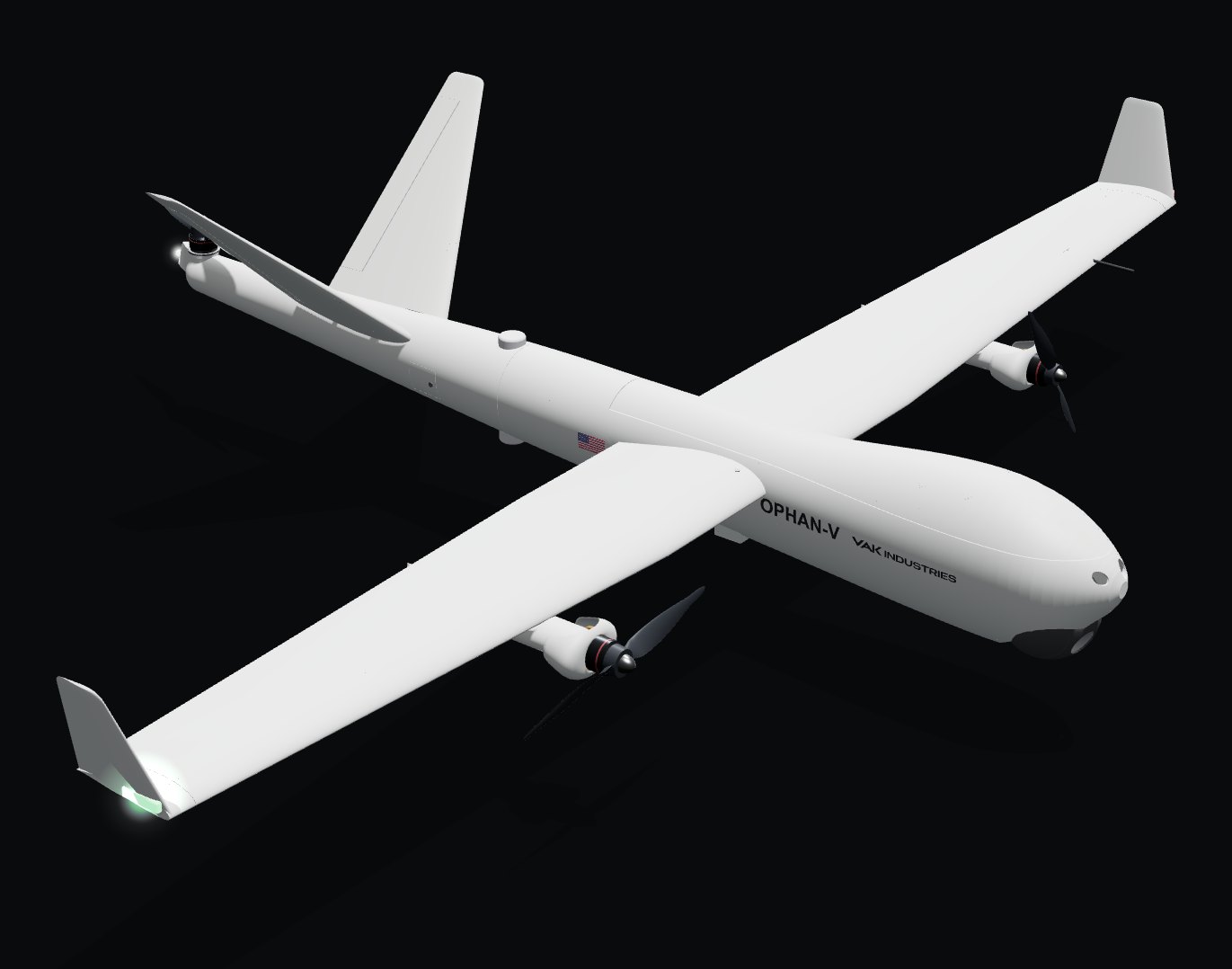
Design targets
| Takeoff weight | Under 20 lb, with payload |
|---|---|
| Payload | More than 3.75 lb |
| Endurance | 2.5 hours |
| Line-of-sight range | 25 mi (40 km) |
| Cruise speed | Above 25 knots |
| Wind | Up to 25 knots |
| Rain | Up to 0.75 in per hour |
| Propulsion | Electric |
| Takeoff and landing | Vertical, in confined areas |
| Crew and transport | Two people, two hard cases |
These are design targets for an aircraft in development. They are not tested performance.
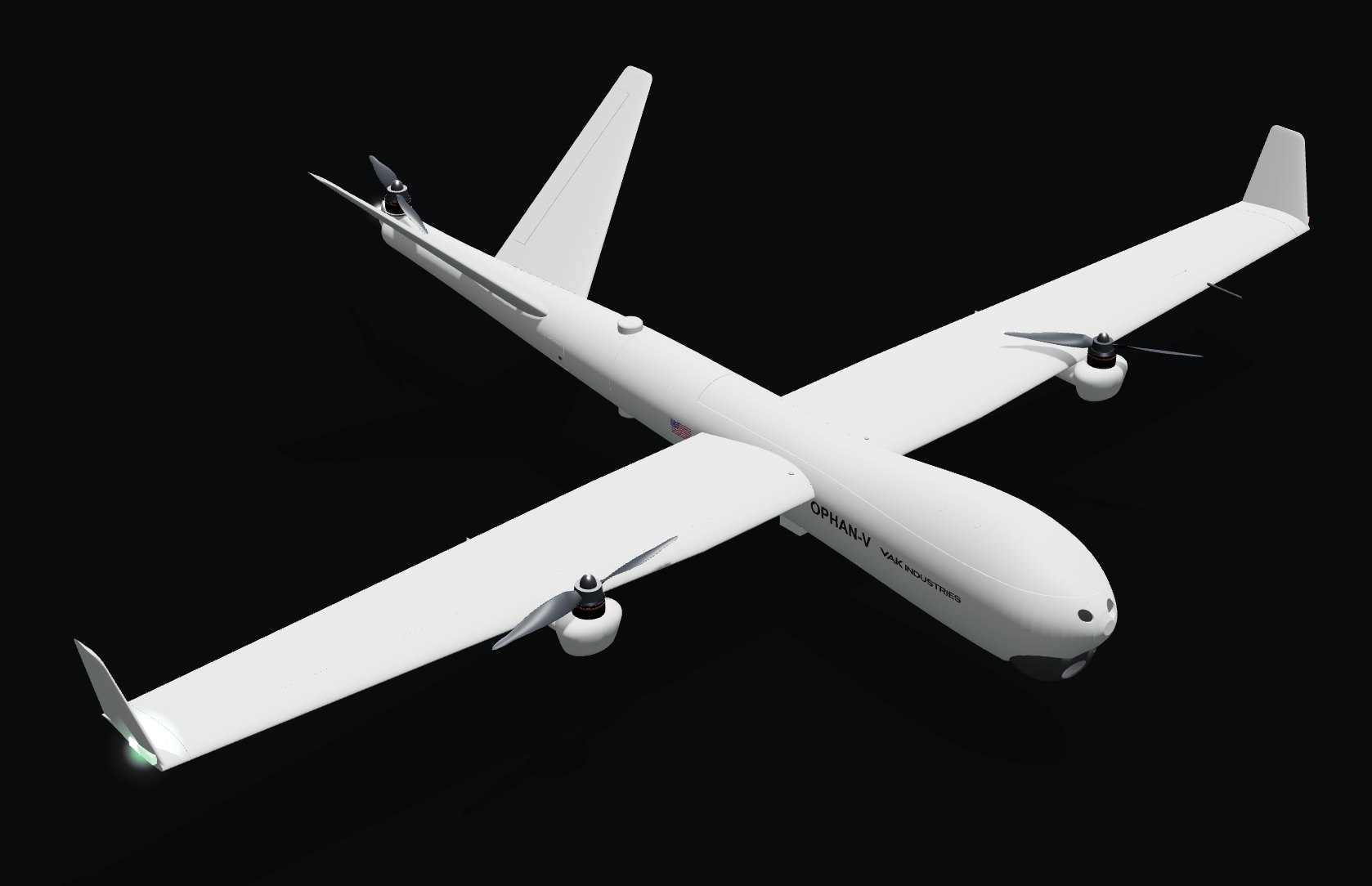
What it carries and does
- 01
Day and night camera
A stabilized camera ball with a zoom daylight camera and a thermal camera, streaming live video to the operator.
- 02
Laser rangefinder
Measures the exact distance to a point of interest so its position can be placed on the map.
- 03
Optional laser designator
A planned payload option that marks a target with a coded laser spot, so other units' laser-guided systems can find it. OPHAN-V itself carries no weapons.
- 04
Onboard detection and tracking
Onboard computing spots and follows people and vehicles and keeps them on screen. People make every decision.
- 05
Works with TAK
Sends its position, video and marked points to TAK, the map software used by U.S. teams.
- 06
Encrypted links and GPS-denied navigation
Designed for encrypted video and control links, and for navigating when GPS is jammed or unavailable.
- 07
No runway or launcher
Takes off and lands vertically in tight spaces, so there is no catapult, net or landing strip to carry.
- 08
Field repairable
The wing halves and tail come apart by hand for packing and repair. Many structural parts can be 3D printed as spares.
We're also developing a recovery and docking system for OPHAN-V. We can't share details yet.